
Football Legacy Manager 24
Hockey Legacy ManagerSports
3.534.00 Reviews
- Version
- 24.1.16
- Installs
- 10.00K
- Age Rating
- Everyone
Screenshots
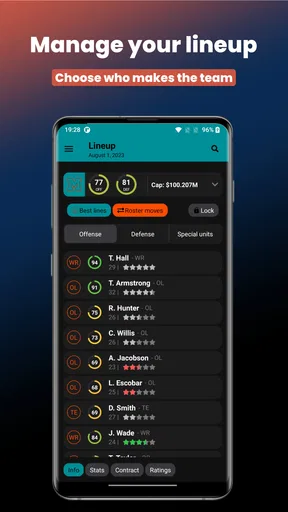
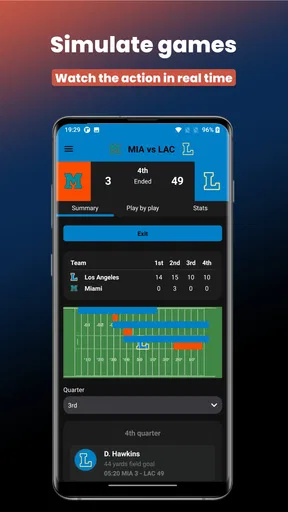
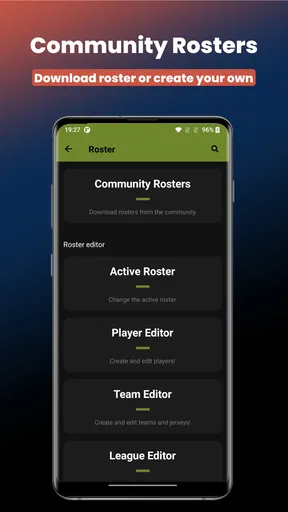
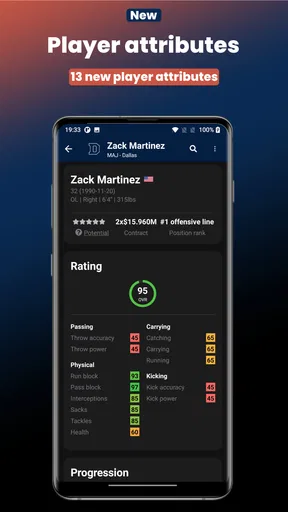
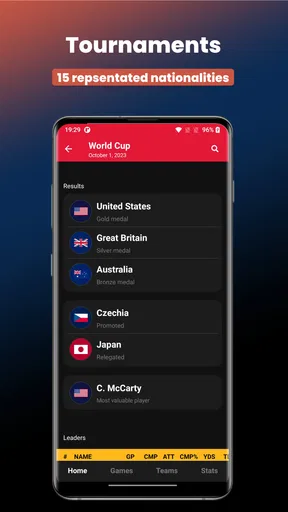
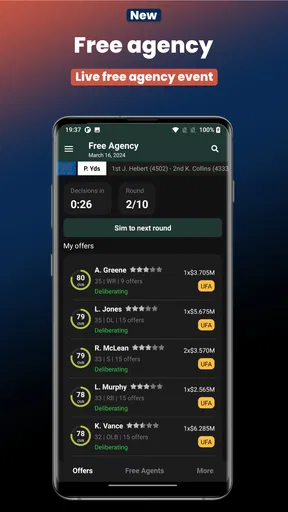
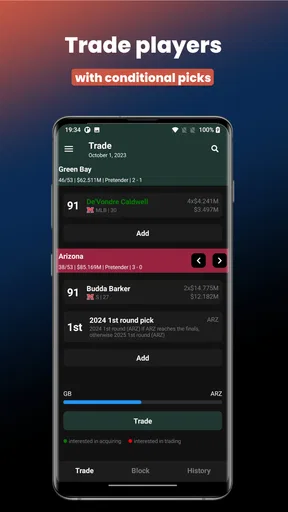
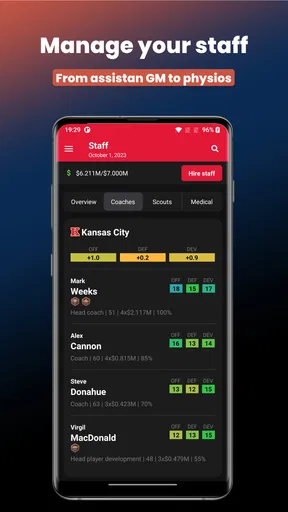
Our Review of Football Legacy Manager 24
 Analysis by Appyee
Football Legacy Manager 24 is the kind of sports management game I open when I want to think through a season rather than control every play on the field. I take the role of a general manager, make roster and team-building decisions, and watch the consequences unfold over time. That makes it a very different experience from an arcade football game: the reward comes from planning, patience, and learning why a promising team can still underperform.
My first impression is that this is a focused game for people who enjoy the front-office side of American football. It is free to download, rated for Everyone, and developed by Hockey Legacy Manager. The audience is still fairly specific, though. If you want immediate action, dramatic controls, or a quick match with little reading, this is unlikely to be the right fit. If you enjoy turning a struggling organization into a convincing long-term project, its slower pace has real appeal.
Getting started without losing the thread
The biggest early adjustment is understanding that the game does not revolve around one exciting button press. A manager’s decision often matters because of what it changes later: the shape of the roster, the balance between short-term results and future planning, and the way several small choices interact. I found it more enjoyable once I stopped treating every result as a direct judgment of one decision.
New players can easily get stuck by trying to manage everything at once. My practical advice is to begin with one clear priority. Decide whether you are trying to improve immediate performance, strengthen the team for the future, or simply learn the interface. Switching priorities every few moments makes it difficult to tell which choices helped and which created new problems.
The game is also easier to read when I pause before confirming a move. I look at the surrounding context, consider what the decision is meant to solve, and then give the result time to develop. That habit matters more here than in a traditional football game because the interesting part is the chain of consequences, not a single isolated play.
There is a useful difference between a bad outcome and a bad process. A team can lose even when the overall direction is sensible, while a lucky win can hide a weak plan. I recommend keeping a simple mental note of the reason behind each major choice. After several turns or stages, I can judge the plan instead of reacting emotionally to the latest result.
Checks worth making before blaming the game
When something feels confusing, I first check whether I have actually completed the previous step or merely viewed the relevant screen. Management games often separate reviewing information from committing an action, and rushing through menus can make it seem as though a choice disappeared. I also reread labels before confirming anything, especially when I am tired or playing quickly on a phone.
Another useful check is whether the current screen is showing the whole situation or only one part of it. A roster decision may look attractive when viewed alone but less convincing once I consider the wider team direction. I avoid making a move simply because one visible number or result looks impressive. The better question is whether it supports the identity I am trying to build.
Because this is a mobile game, I also make sure the device is behaving normally before diagnosing an in-game issue. I close other demanding apps, restart the game if menus stop responding, and confirm that the operating system meets the stated minimum of Android 5.0. These are ordinary steps, but they remove several avoidable sources of frustration.
The current version is 24.1.16, so I would also check that the installed copy is up to date when a menu behaves unexpectedly. I would not assume that every odd result is a bug, however. A decision producing an unwanted sporting outcome is often part of the simulation rather than a technical failure. The distinction is important: restarting cannot turn a disappointing strategic choice into a successful one.
A recovery routine for a messy season
My preferred recovery method is deliberately conservative. I stop making major changes for a moment, identify the most urgent weakness, and address only that area. If I react to every poor result with a new plan, I create noise and lose the ability to evaluate the previous decision. A short period of consistency gives the team’s direction a chance to become readable.
This is also where the game’s legacy angle becomes more interesting. I try to separate decisions that improve the next result from decisions that improve the organization over a longer run. Those goals can point in opposite directions. A quick fix may feel satisfying, but it can leave less room for a coherent rebuild. On the other hand, planning too far ahead can make the present season feel needlessly passive.
One non-obvious tip is to use losses as review points rather than automatic restart points. I ask what I expected to happen, what actually happened, and whether the difference came from a flawed assumption or ordinary uncertainty. That three-question routine gives me more useful information than simply undoing a decision. It also makes a successful turnaround feel earned instead of accidental.
If progress appears to have vanished, I first retrace my actions before assuming that the save or session is broken. Did I finish the relevant stage? Did I leave a screen without confirming? Did I reopen the game into a different point in the workflow? I then restart the app and repeat the action carefully. Safe troubleshooting should begin with reversible steps; I would avoid deleting local game data unless I fully understood the consequences.
For anyone sharing a phone or moving between devices, I would be especially cautious about assuming that progress automatically follows. I would not treat a fresh installation as proof that an earlier career has been recovered. Before making a major change to the device or app, I would record the current state and check the game’s own available options. That is a sensible habit for any long-running management career.
When the problem is really the phone or connection
Not every interruption belongs to Football Legacy Manager 24. A phone with very little free storage, aggressive battery management, an unstable connection, or a crowded background workload can make any mobile game feel unreliable. If the issue appears in several apps, I look at the device first. Restarting the phone, freeing space, and reopening the game are simple steps that often clarify where the trouble sits.
I also pay attention to patterns. A problem that happens only after the phone has been idle may point toward system power management. A problem that appears only when moving between networks may be related to connectivity. A problem that occurs exclusively on one particular screen deserves a closer look at the game itself. Separating these patterns prevents wasted time and avoids making risky changes without a clear reason.
Performance expectations should remain realistic. This is a manager-focused sports title, not a game I choose for fast visual action. If I am looking for a controller-like football experience, I would choose a different category entirely. Here, the value is in decisions and progression, so a player who dislikes reading, comparing options, or waiting for outcomes may find the pace dull even when the app is working correctly.
The age rating of Everyone makes it approachable for a broad audience, but that does not mean every player will enjoy its style. Younger players may need help understanding why a sensible plan can produce a poor result. Adults who already follow American football may appreciate the context more quickly, while newcomers may need time to learn the logic of team management. I see that learning curve as part of the experience, but it is still a curve.
How I use it in an ordinary day
A realistic use case for me is a short evening session after work. I review the team, choose one area to address, make the decision, and stop before turning the whole session into frantic menu hopping. The next time I play, I can evaluate what changed. That rhythm suits the game better than trying to complete an entire long-term project in one sitting.
It also works well as a quiet alternative to action-heavy sports games. I can play while travelling or during a short break, provided I am in the mood to concentrate. The key is not to expect a quick burst of football spectacle. I am spending my attention on judgment, trade-offs, and the satisfaction of seeing a plan take shape.
One practical workflow is to create a personal rule for each session: make no more than one major strategic change, review the result, and leave minor adjustments for later. This keeps the experience manageable on a small screen and makes mistakes easier to diagnose. It is a simple discipline, but it turns the game from a stream of disconnected taps into an ongoing project.
I would skip it if I wanted licensed presentation, live-feeling match control, or a heavily social experience. The usual alternatives in sports gaming are built around playing the contest directly, while this title asks me to enjoy the role behind the scenes. Neither approach is automatically better. The right choice depends on whether I want to be the person making the play or the person shaping the team that takes the field.
Value, patience, and the limits of the free model
The game is free, which makes it easy to try without committing money at the start. Optional in-app purchases range from $4.49 to $10.99 per item. I would approach those purchases as a convenience decision rather than a reason to begin. First I would learn whether the management loop itself holds my attention; spending does not solve a mismatch between the game’s deliberate pace and my personal taste.
The average rating is 3.5 from around 128 ratings, with 34 written reviews. I read that as a sign to keep expectations measured rather than as a simple verdict. A niche management game can be deeply appealing to the right player while feeling too detailed or slow to someone expecting conventional football action. The important question is whether the format matches the way I like to play.
There are over 10,000 installs, so the game has attracted a real audience without presenting itself as a giant mainstream sports release. That scale fits my impression: it feels like a specialized choice for football-management fans. The developer name, Hockey Legacy Manager, may also make some people pause, but the relevant point for me is whether the football management experience suits them, not whether the developer’s name sounds familiar.
The main friction is not a single missing feature I can point to; it is the mental effort required to interpret outcomes. I need to be comfortable with delayed feedback and imperfect control. If I want every result to follow immediately from an obvious action, I may find the game frustrating. If I enjoy uncertainty and long-term planning, that same quality becomes its strongest hook.
Who should install it, and who should pass
I recommend giving it a chance if you enjoy American football, roster-building decisions, and the idea of creating a lasting team identity. It is especially suitable for players who like returning to the same career, noticing patterns, and improving their process rather than chasing instant wins. The free entry point makes that trial straightforward.
I would pass if I mainly want direct control, rapid matches, or a visually spectacular presentation. I would also avoid it if I know I become annoyed by outcomes that cannot be corrected immediately. This is not a criticism of the concept; it is a warning about fit. A game can be well suited to thoughtful managers and still be the wrong download for an action-first player.
For new players, my strongest advice is to protect the learning process. Do not change five things after one disappointing result. Do not confuse a short-term win with proof that the whole plan is sound. Keep decisions understandable, make one adjustment at a time, and use technical troubleshooting only when the problem looks technical. Those habits make the game clearer and reduce the feeling that progress is random.
After spending time with it, I see Football Legacy Manager 24 as a patient, specialized sports game rather than a universal football recommendation. Its appeal comes from the manager’s viewpoint, the long-term challenge, and the satisfaction of recovering from a poor stretch through better reasoning. Its weaknesses are equally clear: the deliberate pace, the need to interpret results, and the possibility that a player looking for action will feel disconnected.
My practical verdict is simple: try it if building a football legacy sounds more exciting than controlling individual plays. Start slowly, check the device and app before assuming something is broken, and judge your plan over several decisions instead of one result. For the right player, this free game can become a thoughtful daily management habit; for everyone else, a more direct football alternative will be the better use of time.
Verdict
Strengths of Football Legacy Manager 24
- Deep management system covering tactics, transfers, training, and finances.
- Large database of clubs and players offers plenty of long-term career variety.
- Matches play quickly, making it easy to progress through multiple seasons.
- Offline-friendly gameplay suits short sessions without needing constant connectivity.
- Detailed statistics help you evaluate squad performance and recruitment decisions.
Limitations of Football Legacy Manager 24
- The interface can feel dense and overwhelming for new football management players.
- Some menus require several taps, slowing down routine tasks during a season.
- Visual presentation is functional, with limited match-day animation and spectacle.
- Advanced features may take time to understand without experimenting or using guides.
- Long careers can become repetitive once your club reaches consistent success.
Other Releases by Hockey Legacy Manager
View All
Football Legacy Manager 25
Sports4.0
Similar Picks in This Category
View All
8 Ball Pool
Miniclip.com4.8

Pooking - Billiards City
AIM TOP GAME TECHNOLOGY LIMITED - pool4.6

Carrom Pool: Disc Game
Miniclip.com4.4

EA SPORTS FC Soccer Mobile 26
ELECTRONIC ARTS4.6

World Soccer League
mobirix4.3

Soccer Cup 2026: Football Game
INLOGIC SPORTS - football tennis golf soccer4.3
Frequently Asked Questions
What is Football Legacy Manager 24?
Football Legacy Manager 24 is a football management simulation in which you take control of a club and guide it through multiple seasons. Rather than controlling players directly during matches, you handle important managerial responsibilities such as transfers, tactics, training, staff decisions, finances, and squad development. It is designed for users who enjoy planning, statistics, and long-term career progression.
Can I play Football Legacy Manager 24 offline?
Football Legacy Manager 24 is primarily suited to a single-player management experience, and many of its core career features can generally be enjoyed without constant internet access. However, certain functions may depend on the version installed, including updates, advertisements, cloud-related services, or online content. It is recommended to launch the game while connected at least once and check its current store description before relying on offline play.
Is Football Legacy Manager 24 free to download?
The availability and pricing of Football Legacy Manager 24 may vary between Android and iOS, as well as by region and store policy. Even when the initial download is free, the game may include optional purchases, advertising, or premium features. Before installing, review the store listing carefully and check the in-app purchase section, especially if the game will be used by children or on a shared device.
Does Football Legacy Manager 24 include real football clubs, players, and leagues?
The game offers a broad football-management setting, but the exact use of official club names, player identities, competitions, and licenses can differ from fully licensed sports titles. Some databases may use fictional or altered names, while others may include recognizable teams and players depending on the edition. If authentic licensing is important to you, inspect the current screenshots and description before downloading.
Is Football Legacy Manager 24 suitable for beginners?
Football Legacy Manager 24 can be approachable for newcomers, but it is more detailed than a simple arcade football game. New players must learn how formations, transfers, player morale, finances, training, and match preparation work together. The best way to begin is by choosing a manageable club, avoiding excessive spending, and changing one tactical or squad decision at a time so the results are easier to understand.
Play our best games!


